Impressionism: Group Exhibition – Palm Beach

Impressionism

Group Exhibition

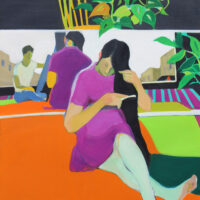
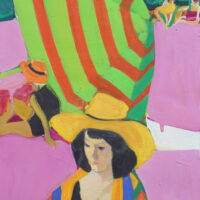
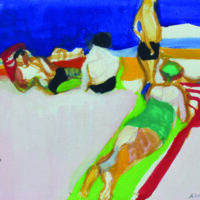
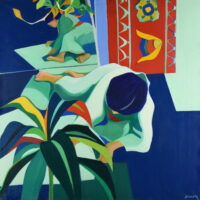
Findlay Galleries, Palm Beach, is pleased to present the exhibition Impressionism, which explores our collection of Impressionist and Post-Impressionist works from artists including Lucien Adrion, Andre Hambourg, Albert Malet, Jacques Martin-Ferrieres, Pierre-Eugene Montezin, Robert-Antoine Pinchon, and Gaston Sébire. The exhibition showcases the similarities and contrast between both schools, from the impressionists’ depiction of the fleeting effect of light, atmosphere and movement to the post-impressionists’ symbolic content, formal order and use of color to portray emotion. The exhibition offers a unique opportunity for visitors to explore the rich artistic history of Impressionism and Post-Impressionism.

Learn More About Each Artist

• Lucien Adrion
• Andre Hambourg
• Albert Malet
• Jacques Martin-Ferrieres
• Pierre-Eugene Montezin
• Gaston Sébire

James MuldoonImpressionism: Group Exhibition – Palm Beach

Gen Paul – Last Great Painter of Montmartre

Gen Paul

The Last Great Painter of Montmartre

Eugène Paul (known as Gen Paul) was born July 2, 1895, on rue Lepic, the same street of Montmartre where Van Gogh had stayed with his brother Théo. The French painter spent most of his life in Montmartre, where the Impressionist revolution, Fauvism and Cubism began.

The Moulin de la Galette, Place Pigalle and Place du Tertre were everyday sights for Gen Paul. The Bateau-Lavoir was well established as the meeting place of independent painters and writers of the early 1900s. Picasso, Braque, Metzinger, Juan Gris, along with Van Dongen, Matisse, Derain, and Dufy, were among the distinguished company that gathered there, Gen Paul was no stranger to it as a young artist looking for inspiration.

Gen Paul never received any formal or academic art training, his art was influenced by his direct exposure to the innovators of Montmartre. His work was an amalgamation of the spatial breakdown of Cubism with the line and flow of the Fauvist painters, especially Raoul Dufy’s. Structurally, Gen Paul’s Cubism was less severe, less firmly organized and less sharp-edged than that of the originators of the movement. Joyous spontaneity, warm high-keyed color and fluidity differentiated Gen Paul’s application of Cubist principles to his compositions. 

From the beginning, Gen Paul’s focus was to create art. He made painting his way of life and made no effort to build a career in any specific field. Lacking an academic or professional nucleus, his was a difficult start. He began selling his work on café terraces in Montmartre for ten years, finally earning a chance to have a gallery exhibition at Bing’s in 1926. Representation by Galerie Bernheim followed along with exhibitions at Galerie Drouant-David. By the early 1950s Gen Paul was well established and had gone from a street painter to being part of the heart of Parisian art. Wally Findlay Galleries began representing the work of Gen Paul in those years and has continued to do so ever since. 

Though he was original and vigorous both as a draftsman and a colorist, Gen Paul was never a standard bearer for any new art movement. At no point was he a theoretical crusader trying to further any one style of painting. He always loved the act of painting and pursued his own work with vigorous freshness. Consequently, his paintings are spontaneous and full of verve; they are works to be savored with great pleasure.

Gen Paul died in his beloved Paris on April 30, 1975 and was buried in the Cimetière Saint-Vincent in Montmartre. A few months after Eugène Paul’s death, Jean-Paul Crespelle, the famous historian and specialist in the artistic and nocturnal life of Montmartre and Montparnasse, wrote that Gen Paul “was the last of the great painters of Montmartre.” His works can be found in important public and private collections in France, America and Asia. Findlay Galleries is proud to present this beautiful collection of paintings by the Last Master of Montmartre.

James MuldoonGen Paul – Last Great Painter of Montmartre

Tadashi Asoma Exhibition

Tadashi Asoma

Japanese American Master of Color

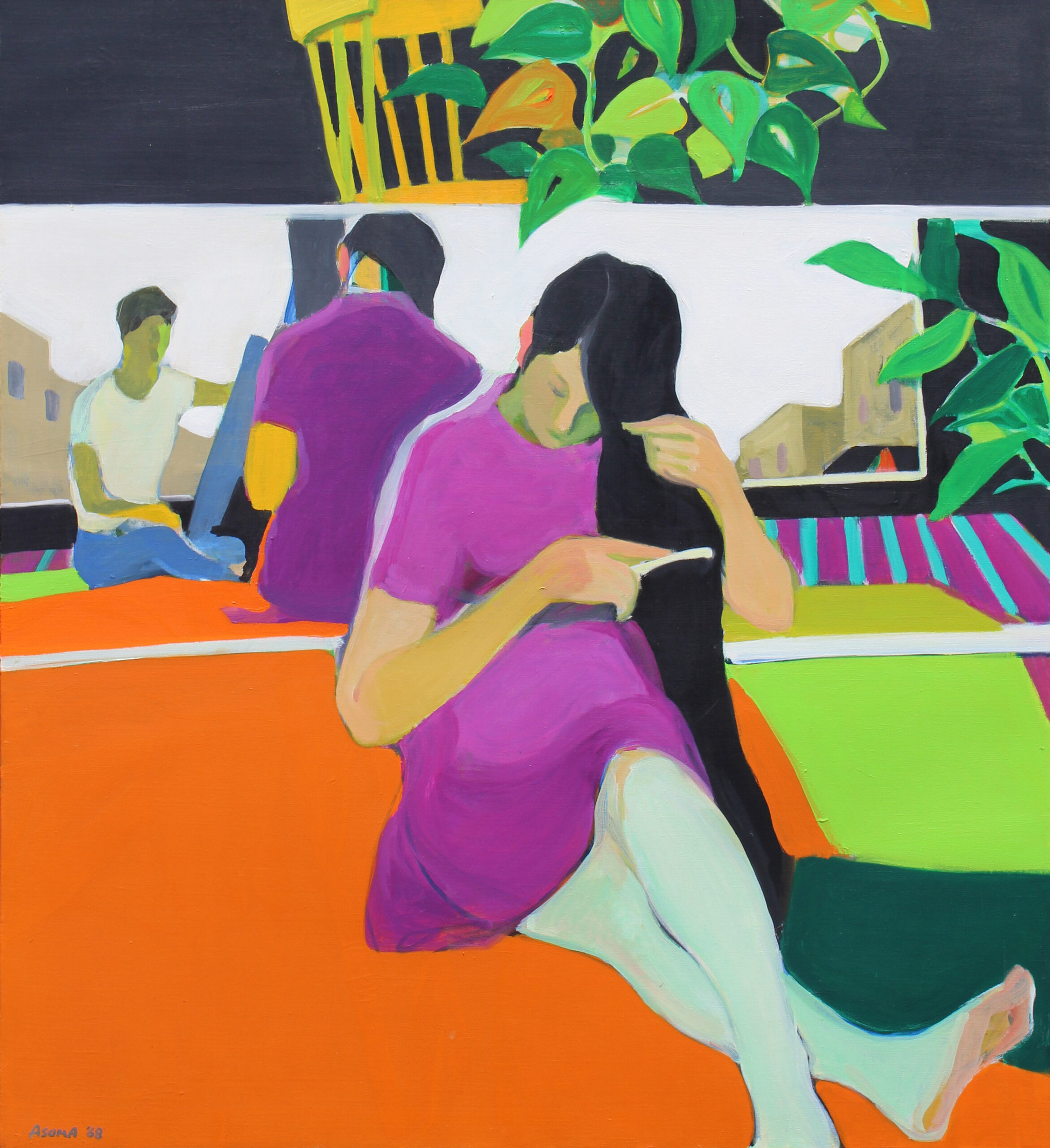
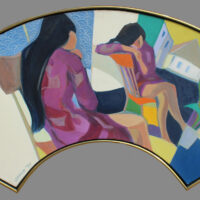
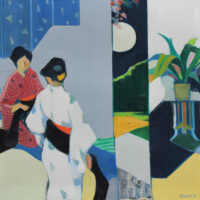
Tadashi Asoma was born in Japan in 1923. He studied at Saitama Teachers College, Urawa, the Bijitsu Gakko, Tokyo. In 1958 he received a Japanese Government scholarship to study painting at the renowned Parisian Académie de la Grande Chaumière. After Paris, he visited the United States and was fascinated with the American style of painting. He studied at the New York Art Students League and moved to New York permanently along with his family. In 1961, Asoma had his first exhibition in the United States at the Japan Society in New York and San Francisco.
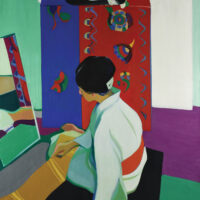
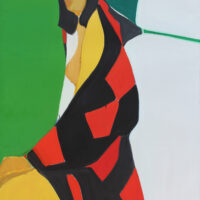
Asoma lived in a world open to his keen powers of observation. His ideas regarding the purity and vibrancy of color showcased his understanding of the Fauves, while his use of pattern and geometric elements were a direct exploration of the School of Paris Modernist ideals. Asoma’s oeuvre covered a wide range of themes, such as his landscape vistas of the Hudson River (he lived for over twenty years in Garrison, NY), which was always complemented by his penchant for figurative compositions. Asoma found beauty through the arrangement of nuanced spaces, reflections, and patterns against brilliantly colored solid areas; through his artistry, those solid forms went from flat surfaces to becoming expanses of space.
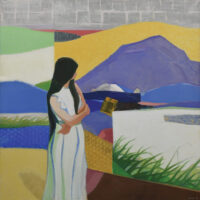
Findlay Galleries is proud to have represented Tadashi Asoma during his lifetime and to continue showcasing his work at our galleries. Asoma’s works can also be found at leading corporate collections and museums, including the Albright-Knox Museum, Buffalo, New York; the Nelson-Atkins Museum of Art, Kansas City, Missouri; San Diego Museum of Art, San Diego, California and Tokyo Central Museum, Tokyo, Japan.
James MuldoonTadashi Asoma Exhibition

Ptolemy Mann – Unconscious Color

Ptolemy Mann

Unconscious Color

In this exhibition, contemporary British artist Ptolemy Mann embarks on a deeper exploration of her fluid abstract forms and fluorescent palette. Building on her work with woven textile, Mann carries forward her interest in Abstract Expressionism, architecture, and color theory to large scale works on canvas and paper. She describes her process as “working with paint on canvas and paper on an ongoing series of ‘Unconscious Color Paintings’; trying to switch off that conscious, judgmental voice we all have inside and bring forth something altogether more lyrical and forgiving. After 25 years working as a hand weaver with all the technical restrictions the process entails, this immediacy has been a revelation.” In addition to international exhibitions, Mann has a multi-year installation at the Tate Modern and was the recipient of three grants from the Arts Council of England. Findlay Galleries is proud to present this refreshing exhibition as an exclusive representative of her work in the United States.

James MuldoonPtolemy Mann – Unconscious Color

Ronnie Landfield – Recent Works PB 2023

Ronnie Landfield

Recent Works

A committed and talented artist from an early age, Ronnie Landfield’s professional career as a painter began with Minimalist and Hard-Edge painting in 1965 at the age of 18. By the late 1960s, he found his passion for the lyrical abstractions of Color Field painting. These Lyrical abstractions, informed by his deep understanding of pure color in minimalist solid form, became his trademark artistic style which he displayed to great effect throughout his career. His work conjures the natural world at all scales and often reminds us of the duality of existence itself, random and planned, organic and artificial, Color Field and Hard-Edge. 

Since his first exhibition in 1967, Ronnie Landfield has enjoyed a successful and progressive career as an artist. Widely collected and critically recognized, Landfield’s work has been included in many important institutions and permanent collections, such as the Metropolitan Museum of Art, the Museum of Modern Art,
the Whitney Museum of American Art and the Art Institute of Chicago. Most recently, Landfield received the 2022 Hamptons Fine Art Fair Lifetime Achievement in Painting Award, honoring his contributions and dedication to American abstraction.

Findlay Galleries proudly represents Ronnie Landfield exclusively and welcomes you to enjoy this new collection of his paintings on view in Palm Beach.

James MuldoonRonnie Landfield – Recent Works PB 2023

Charles Neal – The Pursuit of Color

Charles Neal

The Pursuit of Color

Findlay Galleries presents The Pursuit of Color, an exhibition of works by British contemporary impressionist painter Charles Neal. The exhibition explores the significant role of color in a composition and its relationship to the themes Neal explores in his works, particularly the effect of time on subject and place. In addition to paintings that capture an impressionist en plein air moment, the exhibition includes works from his Alter-Realist series. These Alter Realist paintings are wide-ranging in their application of color theory, capturing a variety of tonalities. We invite you to enjoy this exhibition of new works by Charles Neal at Findlay Galleries’ Palm Beach location.

James MuldoonCharles Neal – The Pursuit of Color

Gustavo Novoa – Recent Paintings 2023

Gustavo Novoa

Recent Paintings

Findlay Galleries is proud to present a selection of recent paintings by contemporary primitive painter Gustavo Novoa on view at Findlay Galleries, Palm Beach.

Visit Gustavo Novoa’s artist page to learn more about his works and artistic career. Findlay Galleries has exclusively represented Novoa’s works for 52 years, whose works can be found around the globe in numerous esteemed collections.

James MuldoonGustavo Novoa – Recent Paintings 2023

Robert Natkin – Veil on the Infinite

Robert Natkin

Veil on the Infinite

Findlay Galleries is pleased to present a comprehensive exhibition of Robert Natkin paintings featuring important paintings from the artist’s most desirable periods.

Natkin created some of the most innovative color abstractions of the late 20th century. Populated by various formal elements -stripes, dots, grids, and free-floating forms, his light-filled canvases are sensuous, playful, and visually complex. Natkin was the subject of a major monograph written by British art critic Peter Fuller, who aptly described his paintings as a “veil on the infinite.”

Born in 1930, Natkin studied at the Art Institute of Chicago, where he found inspiration in the color and patterns of Pierre Bonnard and Henri Matisse and drew a lifelong interest in emotional content from Paul Klee’s Oeuvre. Natkin moved to New York where his reputation was enhanced with his inclusion in Americans Under 35 at the Whitney Museum in 1960, the first of several museum exhibitions during his career. He enjoyed critical and commercial success for several decades and lived in Danbury, Connecticut, with his wife and fellow artist, Judith Dolnick, until his death in 2010.

Over the course of his long career, Natkin was widely recognized for successfully achieving his stated goal of “making paintings that are more interesting tomorrow than they are today.” His paintings are in the collections of several prominent museums, including the Metropolitan Museum of Art (New York), the Museum of Modern Art (New York), the Guggenheim Museum (New York), and the Centre Pompidou (Paris).

James MuldoonRobert Natkin – Veil on the Infinite

Primitive Worlds

Primitive Worlds

Group Exhibition

Primitive Worlds

Findlay Galleries is proud to present Primitive Worlds, an exhibition featuring paintings by Camille Bombois, Orville Bulman, Henri Maïk, Ljubomir Milinkov, Annette Ollivary, and Gustavo Novoa at our Palm Beach gallery in December 2022.

While the first Naïf painters made an appearance in the 1600’s, the work of Henri Rousseau in the late 1800’s strongly influenced a future generation of artists who desired a primitive freshness in their work. The unfettered creativity that came with being self-taught defined the Naif painter. As modern living reached all continents in the 20th century, the art world developed an affinity for the sophisticated simplicity of Naïf paintings, contrasting the graying and troubled world outside.

Beginning in 1931 with an exhibition at his Chicago gallery, Wally Findlay was the first US art dealer dedicated to developing and representing European Naïf painters. Findlay Galleries’ first selection of works by Rousseau and Bombois eventually expanded to include contemporary artists such as Maïk, Ollivary, and Novoa. This new group used the Naif style of painting to create art outside traditional realms; objects, landscapes, and creatures exist in an everlasting Eden. While different from their predecessors, they remained true to the craftsmanship, manifest sense of composition, expressive use of color, and solid foundation of design typical of Naïf painters. Findlay Galleries is delighted to share their creativity with you in Primitive Worlds.

James MuldoonPrimitive Worlds

Fritz Rauh – American Abstract Expressionist

Fritz Rauh

American Abstract Expressionist

Fritz Rauh was born in Wuppertal, Germany, in 1920. He enrolled in the Braunschweig Art School in 1938, although his studies were interrupted by WWII. Following the war, he completed his formal training in Braunschweig and met his future wife, Alix; they emigrated to the United States in 1954 and settled in Marin County, California.

Rauh had his first solo exhibition in 1956 at the De Young Museum in San Francisco. The exhibition was well received by critics applauding Rauh’s unique approach to canvas as a surface to be “opened” with color and shapes. Small amoeba-like shapes filled his canvases, closely packed on a contrasting and sometimes harmonizing ground in a way that foreground and background become interchangeable. The vibrating surface that resulted, heightened by areas of flat color defining the limits of the canvas, evokes the beauty of micro-organic worlds.

Rauh’s critical and commercial success in the following decades led to his works being exhibited in museums and galleries worldwide, including SF MOMA, Oakland Art Museum, International Art Expo in Osaka, Japan and Gallerie Schreiner in Basel, Switzerland. Today, Findlay Galleries is proud to represent the artist’s estate exclusively.

James MuldoonFritz Rauh – American Abstract Expressionist