Ronnie Landfield – Recent Works

Ronnie Landfield

Recent Works

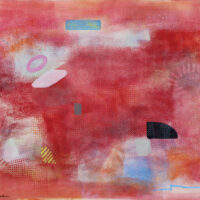
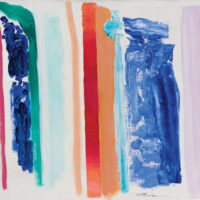
Since his first exhibition in 1962, when he was in his early twenties, Ronnie Landfield has enjoyed a successful and progressive career as an artist. Widely collected and critically recognized, Landfield’s work has been included in many important institutions and permanent collections.

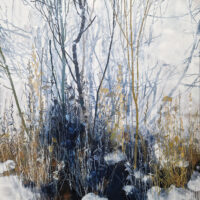
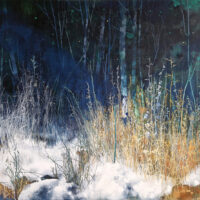
The 1960s and 70s were Landfield’s formative years, during which Landfield found himself experimenting with rollers, staining, hard-edge borders, and painting unstretched canvas on the floor for the first time. By the late 1960s, he moved away from Minimalism and Hard-edge painting to Lyrical Abstraction, composing abstractions seemingly inspired by the natural world and often incorporating a horizontal band as a counterpoint to the random elements inherent in pouring and staining.

These abstract landscapes of 1968 and 1969, and the period that followed, constitute Landfield’s most original work and most important contributions to the history of contemporary painting. The Whitney Museum of American Art first included Landfield’s work in its Annual Exhibition in 1969. That same year, he was awarded a Copley Foundation (Cassandra) Grant for Painting and held his first one-man exhibition at the David Whitney Gallery in New York. In 1971, the Whitney again included Landfield in their Lyrical Abstraction Exhibition. In 1972, his work was exhibited at the Museum of Modern Art and added to the permanent collection. In 1973, he was invited once again to exhibit at the Whitney Museum of American Art.

Today, Landfield’s work is in the collections of the Metropolitan Museum of Art, the Museum of Modern Art, the Whitney Museum of American Art, the Art Institute of Chicago, and other important public institutions. Most recently, Landfield received the 2022 Hamptons Fine Art Fair Lifetime Achievement in Painting Award, honoring his contributions and dedication to American abstraction. Findlay Galleries proudly represents Ronnie Landfield. To further celebrate his achievements, an exhibition of his most recent works will be on view at Findlay Galleries New York, opening September 8, 2022.

James MuldoonRonnie Landfield – Recent Works

Henrik simonsen NY 2023

Henrik Simonsen

Recent Works | New York Exhibition

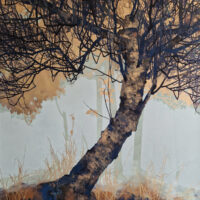
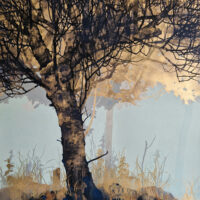
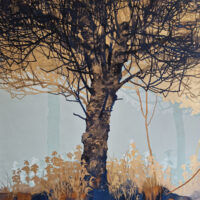
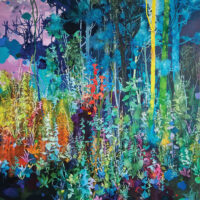
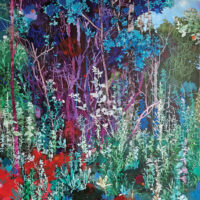
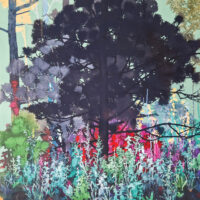
Findlay Galleries presents an exhibition of new works from the Danish contemporary artist Henrik Simonsen. In this new body of work, Simonsen continues his exploration of time, memory, and the human experience as understood through his unique lens and remarkable talent conveyed through his exploration of highly detailed and often vividly colored plants and trees.

For Simonsen the visible process of creating is of great importance. He explains:

“What is very import to me when I work is the history of the piece. This is why I rarely attempt to erase anything completely on a canvas. I prefer to keep the drawing that I later abandoned, changed or worked over as a part of the finished piece. I feel this gives the painting a feel of having occupied a period in time because the layers allow the history of creation to be visible rather than reducing the piece to just an impenetrable surface.” – Henrik Simonsen

Henrik’s work is executed completely free hand.  Although his work sometimes gives the appearance of stenciling, this is merely the result of a master draftsman who is as talented with a brush as with a pencil.  Stencils would be stifling and deadening.  For Simonsen, each work is an organic creation, a mystery unfolding, the end result a revelation even to the artist himself.

James MuldoonHenrik simonsen NY 2023

Robert Natkin NY

Robert Natkin

New York Exhibition

Findlay Galleries is pleased to present a comprehensive exhibition of Robert Natkin paintings featuring important paintings from the artist’s most desirable periods.

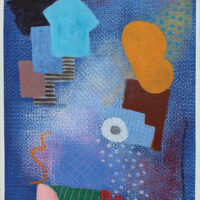
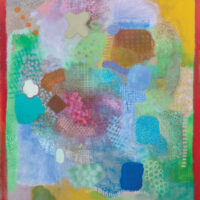
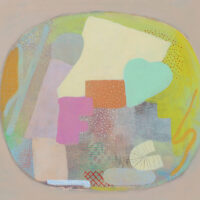
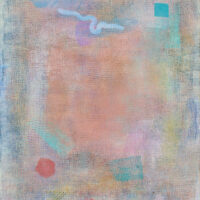
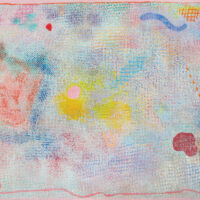
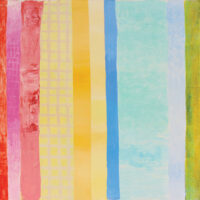
Natkin created some of the most innovative color abstractions of the late 20th century. Populated by various formal elements including stripes, dots, grids, and free-floating forms, his light-filled canvases are sensuous, playful, and visually complex. Natkin was the subject of a major monograph written by British art critic Peter Fuller, who aptly described his paintings as a “veil on the infinite.”

Born in 1930, Natkin studied at the Art Institute of Chicago, where he found inspiration in the color and patterns of Pierre Bonnard and Henri Matisse and drew a lifelong interest in emotional content from Paul Klee’s oeuvre. Natkin moved to New York where his reputation was enhanced with his inclusion in Americans Under 35 at the Whitney Museum in 1960, the first of several museum exhibitions during his career. He enjoyed critical and commercial success for several decades and lived in Redding, Connecticut, with his wife and fellow artist, Judith Dolnick, until his death in 2010.

Over the course of his long career, Natkin was widely recognized for successfully achieving his stated goal of “making paintings that are more interesting tomorrow than they are today.” His paintings are in the collections of several prominent museums, including the Metropolitan Museum of Art (New York), the Museum of Modern Art (New York), the Guggenheim Museum (New York), and the Centre Pompidou (Paris).

James MuldoonRobert Natkin NY

Hard-edge Paintings & Michael Dunbar Sculptures

Hard-edge & Dunbar

Hard-edge Paintings & Michael Dunbar Sculptures

Findlay Galleries is pleased to present an exhibition of Michael Dunbar sculptures and hard-edge paintings on view from September 5 to October 3. Dunbar’s small-scale bronze and steel sculptures, which reference clocks, compasses, and sextants, share an interest in mathematical relationships with hard-edge painters such as Ilya Bolotowsky, John Ferren, and Ward Jackson. 

Though backgrounds and philosophies may differ, craftsmanship, clean lines, geometry, and scale are the primary concerns of all artists in the exhibition. Ferren’s work from the 1960s reveal an interest in the concept of dynamic symmetry. This concern led him to explore the mathematical construction of space as it relates to squares and rectangles and concepts such as the catenary, a parabolic curve evidenced in works such as Royal Choice, 1969. 

Ward Jackson, by contrast, was inspired to move away from gestural painting by the work of Piet Mondrian and Josef Albers. Volume II, c. 1973 evinces the austere, hard-edge style Jackson began in the early 1960s and developed into his signature style. Like Jackson, Ilya Bolotowsky also looked hard at Mondrian’s neo-plastic paintings, initiating a purification of form and color evident in works such as Rhomb, Pale Yellow, Blue and White, 1976. In such works, the composition’s right angles and primary colors have no association with the natural world, exorcising all suggestions of illusionistic space and emphasizing the overall flat tension of the painting. 

Findlay Galleries invites you to explore the relationships and connections among this select group of artists at our New York Location.

James MuldoonHard-edge Paintings & Michael Dunbar Sculptures

Works On Paper – NY Summer Exhibition

Works On Paper

New York Summer Exhibition

Findlay Galleries, New York, is pleased to present its Works on Paper & Multiples exhibition this summer. The selection features drawings, prints, and paintings by gallery artists including John Ferren, Robert Richenburg, Leonard Edmondson, and Ptolemy Mann. Intricate designs and details that can only be achieved through these mediums will highlight the importance of the delicate process of creating art on paper. The artists’ styles vary from abstract to realistic, but each work showcases individual talents and unique approaches to creation in these important mediums.

James MuldoonWorks On Paper – NY Summer Exhibition

Picasso Ceramics Collection

Pablo Picasso (1881-1973)

Madoura, Vallauris Ceramics

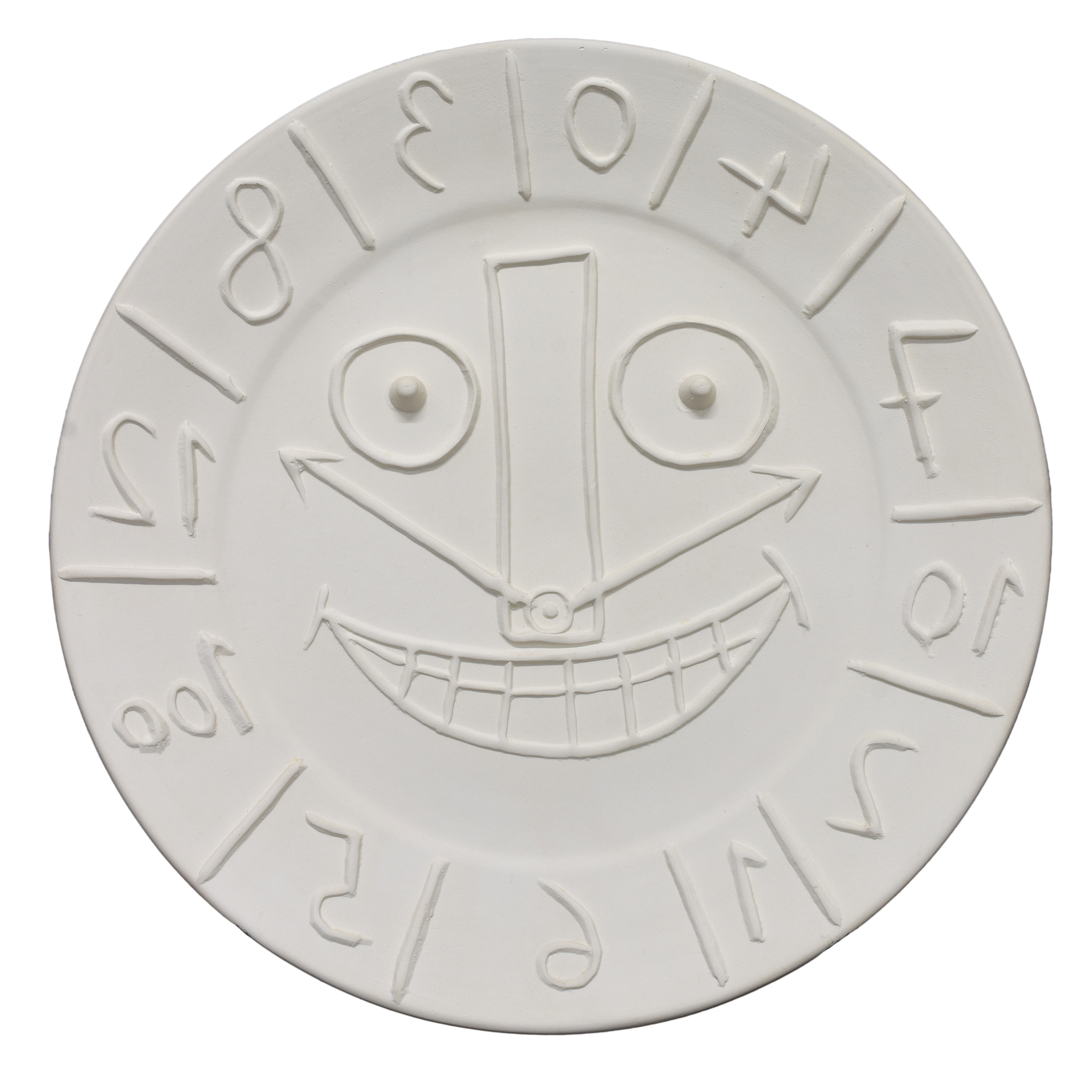
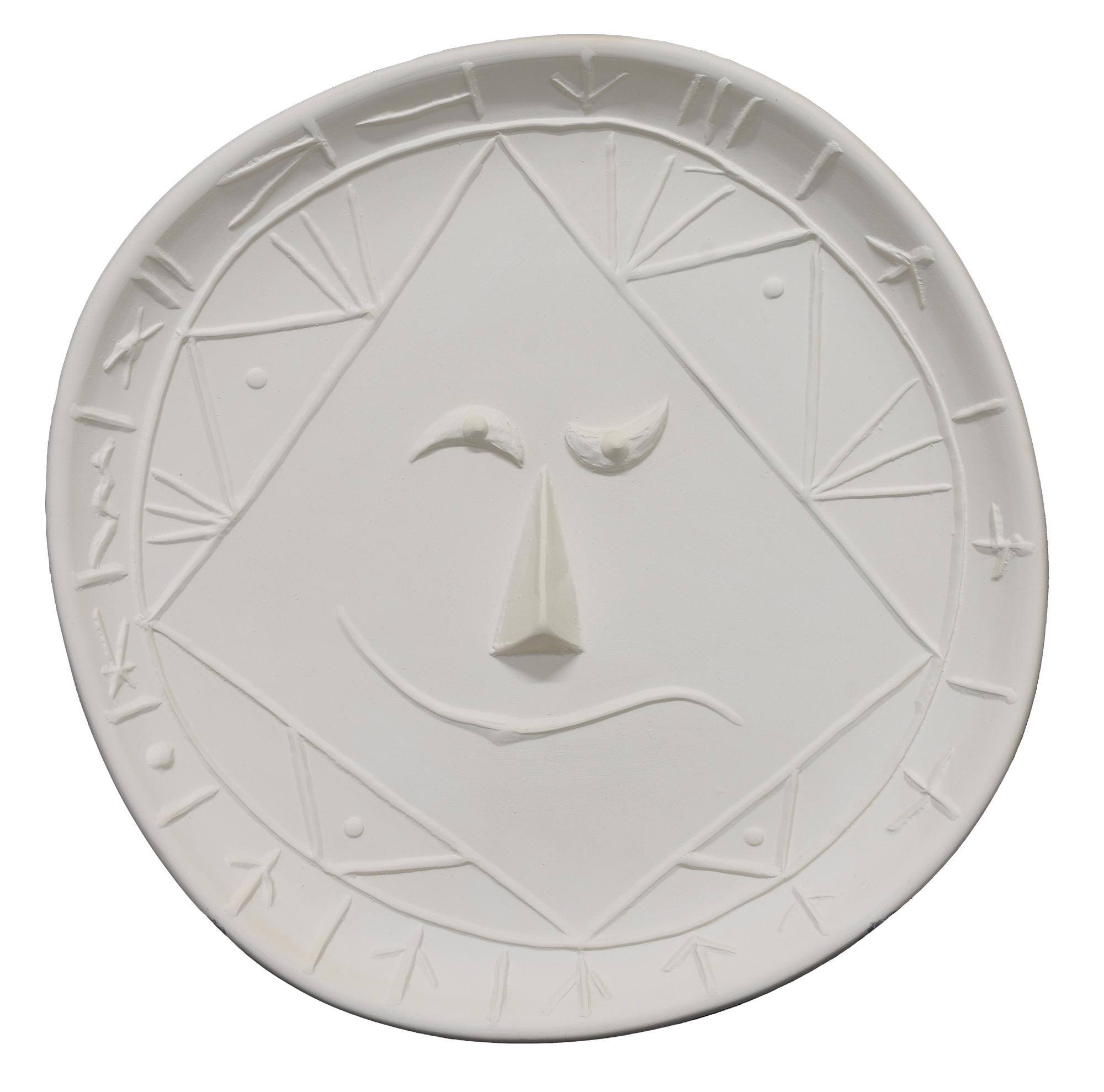
Pablo Picasso’s interest in ceramics began in Paris in the early 20th century when he discovered the works of Paul Gauguin and met the potter Paco Durio. However, Picasso’s first ceramics were not created until after World War II while staying with his friend, engraver Louis Fort, in the South of France in 1946. The pair decided to attend a local craft fair in the town of Vallauris, the first crafts fair after the end of the war in a town where pottery has been a tradition since Roman times. Picasso took a particular interest in the works from the studio Madoura and requested to meet the owners, Suzanne and Georges Ramié. That very same day, after being invited by Suzanne and Georges to their workshop, Picasso created three clay figurines as a trial. Delighted with the result, Picasso expanded his oeuvre to include ceramics, a medium he would continue to explore until 1971, sometimes as the exclusive focus of his creative energies.

Picasso found inspiration in the primitive and mythological elements of ceramics, as well as in the process of metamorphosis from clay through fire to finish. This process of metamorphosis, using earth, water and fire, and the physicality of its constructs appealed to Picasso greatly. He applied his previously learned techniques in painting, etching, sculpting, and printmaking to create works that transformed utilitarian household items into art objects, often with playful brushstrokes and deep etched incisions and reliefs.

Picasso’s ceramics constituted one of the central pillars of his artistic production and provided him with a stage of rebirth, exploring the creative potential, language, and tradition of the medium. Additionally, he wished to make his ceramics accessible to all, saying that he wanted “everyone who bought a ceramic to leave with change in their pocket.” Today, as appreciation for the medium has grown and the true power of Picasso’s creation within it has come into focus, art lovers and collectors continue to search for choice works from this beautiful and valuable body of work.

James MuldoonPicasso Ceramics Collection

Alexander Calder – Maguey Fiber Tapestries & Multiples

Alexander Calder

Maguey Fiber Tapestries & Multiples

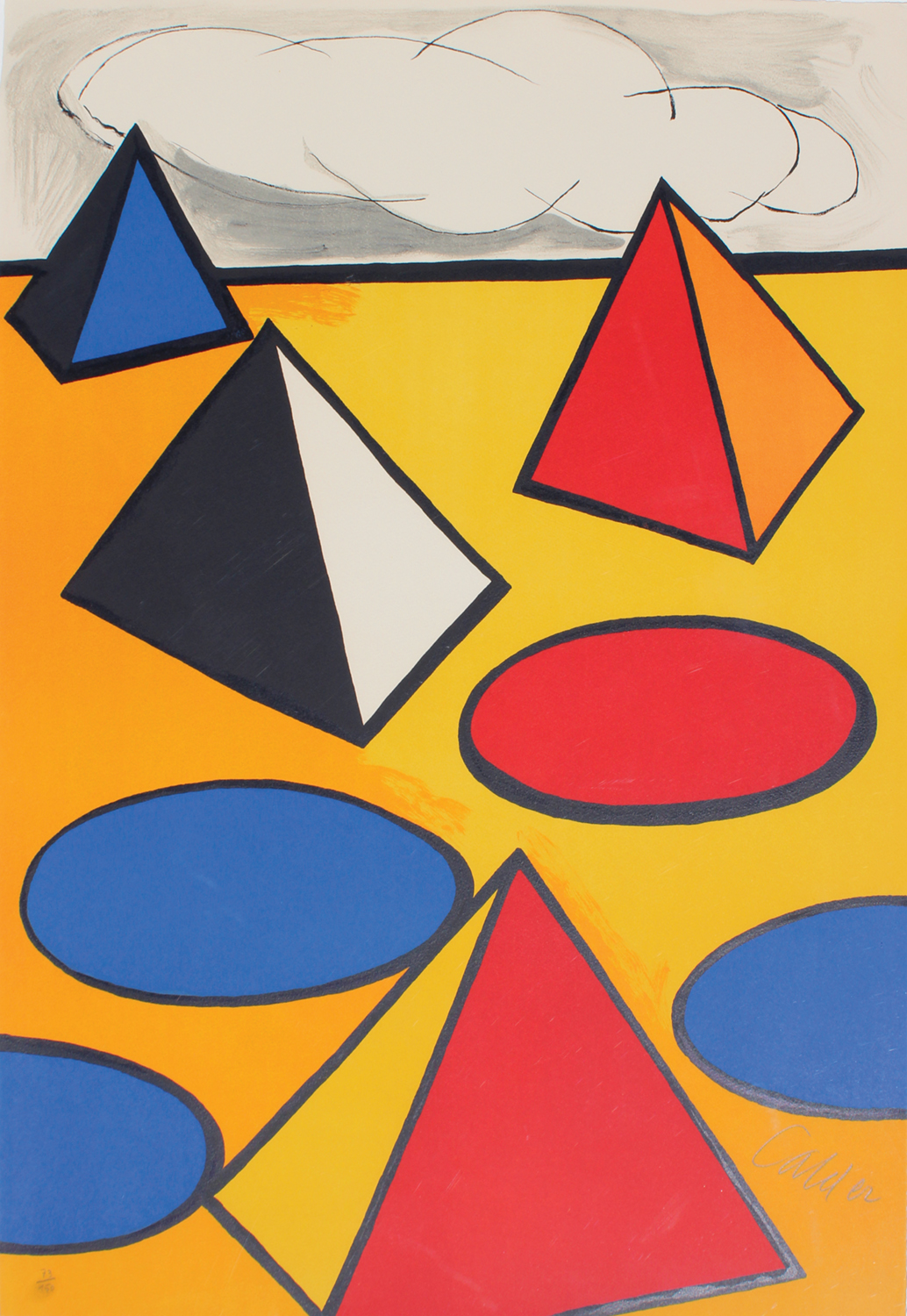
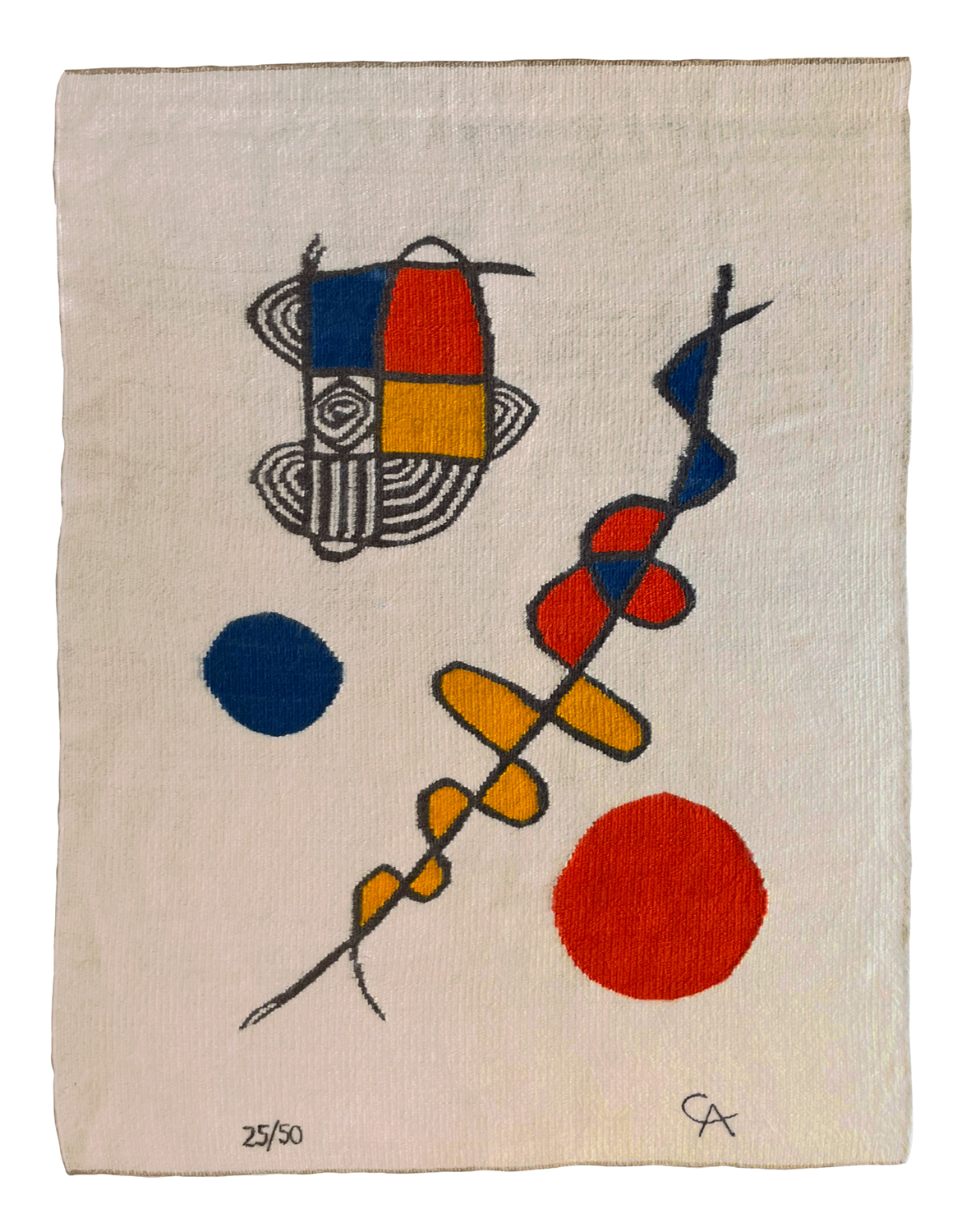
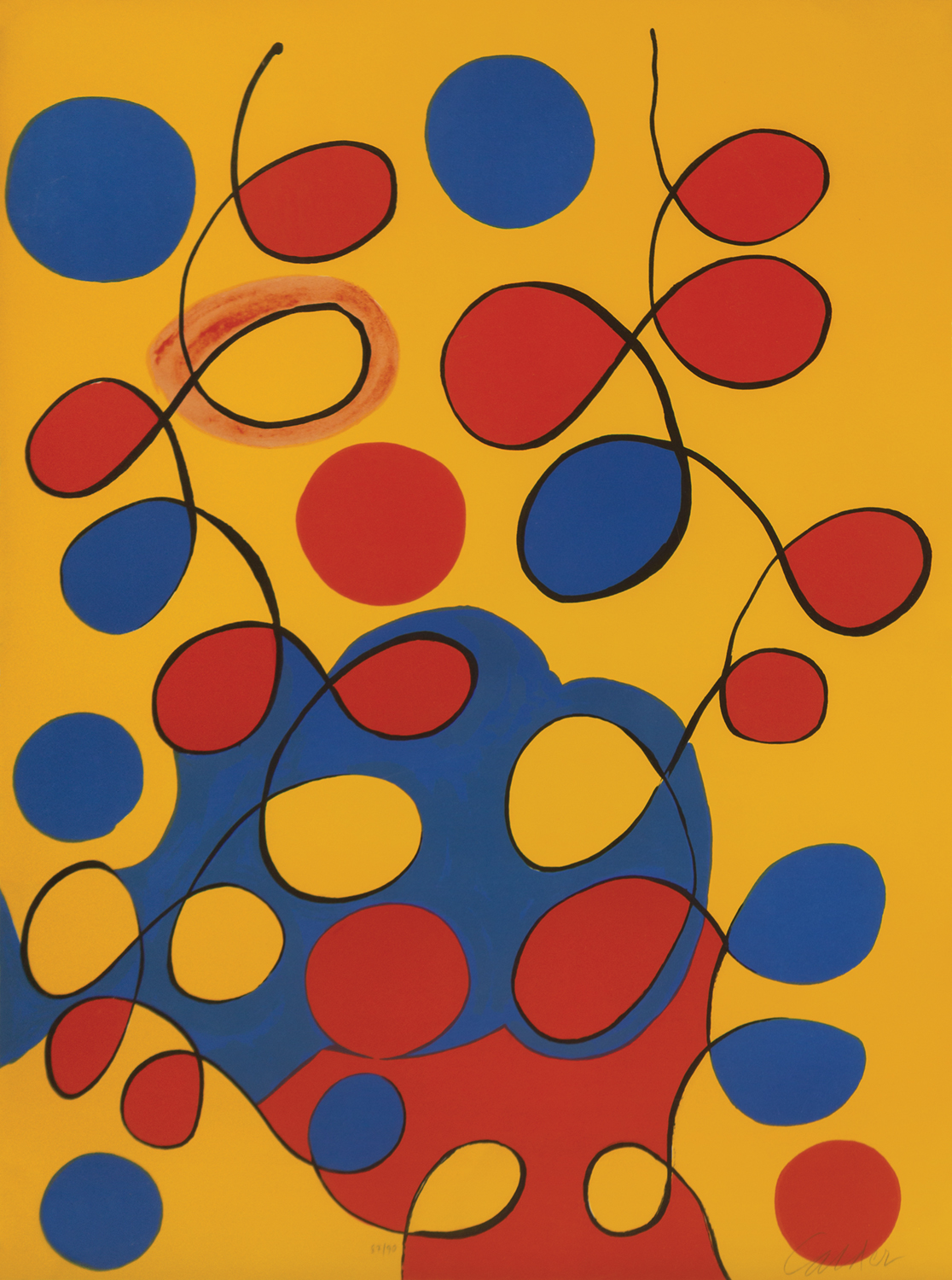
Alexander Calder was a world-renowned abstract artist with a distinctive, unique style. He was mostly recognized for his invention of the mobile and his monumental stabile sculptures, but Calder also worked in various other mediums, both traditional and experimental. This exhibition focuses on Calder’s Maguey fiber tapestries supported by a selection of multiples from the Findlay Galleries collection. 

On December 23, 1972, three earthquakes struck the city of Managua, Nicaragua. Nicaragua’s neighboring countries, as well as political figures, celebrities and Pope Paul VI, responded immediately to raise money and awareness for those in need. One of those people was Catalina Meyer, also known as Kitty, a Manhattan socialite who had grown up in Nicaragua after escaping World War II with her Polish family. Meyer, a distinguished patron of the art world, wished to create an arts mission to rebuild Managua. Meyer put together auctions with well-known auction houses to help raise money. Alexander Calder was one of five artists who provided lithographs for Meyer’s auctions. In 1973, Meyer visited Calder in France, bringing with her a Masaya hammock, a popular product of Nicaragua made by local artisans, as a gift for his donated lithographs.  

Calder was so captivated and impressed with the quality workmanship of the hammock he cultivated a plan with Meyer to produce Calder-designed hammocks and tapestries. The hammocks would be produced by the Masaya artisans, and the tapestries by Guatemalan artisans who would be paid four times the going rate.

For this project, he commissioned 100 local weavers to make a collection of 14 total tapestries designed in limited editions of 100 per design. The pieces maintained Calder’s primary colors and iconographic images. Noteworthy because of the medium, the tapestries were made from woven maguey fiber, a hemp-like material formed from agave plant leaves. The Guatemalans, well-known for their weaving, produced the tapestry works. However, the works were not woven. To accommodate Calder’s complicated designs and color patterns, the weavers devised a technique where they braided the works. 

Calder was so impressed by the outcome of the work that he acquired a few for his home and studio in France. 

Today, these works can be found in permanent museum collections, including the Morris Museum of Morristown, New Jersey and The Wisconsin Museum of Quilts and Fiber Arts in Cedarburg, Wisconsin.

James MuldoonAlexander Calder – Maguey Fiber Tapestries & Multiples

Gaston Sebire – Les Fleurs Enormes

Gaston Sébire

Les Fleurs Énormes

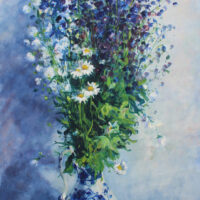
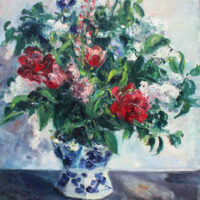
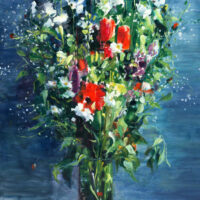
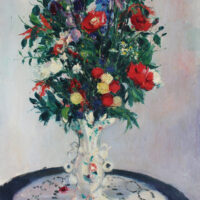
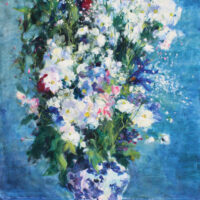
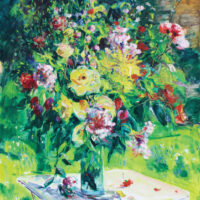
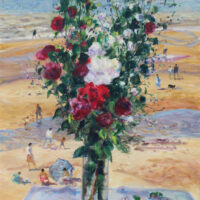
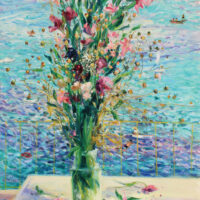
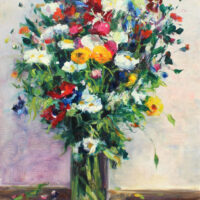
Findlay Galleries is pleased to present the exhibition Les Fleurs Énormes, a selection of monumental floral paintings by renowned French Post-impressionist Gaston Sébire. Like fireworks, Sébire’s monumental floral paintings are at once beautiful and studied arrangements, as well as explosions of color into space. His work is a faithful representation of the moment, presenting the viewer with balanced compositions that carefully consider the principles of floral design. At the same time, the color and form of the arrangements spring forth from within their vessels.

These complex compositions appeal both to those seeking a more ‘contemporary’ aesthetic as well as those preferring more traditional styles. Such duality is made manifest through the scale of these works, which turn floral still-life compositions into dynamic and monumental paintings.

James MuldoonGaston Sebire – Les Fleurs Enormes

Fritz Rauh – New York Exhibition

Fritz Rauh

American Abstract Expressionist

Fritz Rauh was born in Wuppertal, Germany, in 1920. He enrolled in the Braunschweig Art School in 1938, although his studies were interrupted by WWII. Following the war, he completed his formal training in Braunschweig and met his future wife, Alix; they emigrated to the United States in 1954 and settled in Marin County, California.

Rauh had his first solo exhibition in 1956 at the De Young Museum in San Francisco. The exhibition was well received by critics applauding Rauh’s unique approach to canvas as a surface to be “opened” with color and shapes. Small amoeba-like shapes filled his canvases, closely packed on a contrasting and sometimes harmonizing ground in a way that foreground and background become interchangeable. The vibrating surface that resulted, heightened by areas of flat color defining the limits of the canvas, evokes the beauty of micro-organic worlds.

Rauh’s critical and commercial success in the following decades led to his works being exhibited in museums and galleries worldwide, including SF MOMA, Oakland Art Museum, International Art Expo in Osaka, Japan and Gallerie Schreiner in Basel, Switzerland. Today, Findlay Galleries is proud to represent the artist’s estate exclusively.

James MuldoonFritz Rauh – New York Exhibition

Gordon Onslow Ford

Gordon Onslow Ford

Member of the Lucid Art Movement

British-born American painter Gordon Onslow Ford (1912-2003) was an important bridge between the Parisian Surrealist and Abstract Expressionist movements, exploring interests in spontaneous creation and metaphysical ideas like the collective unconscious.

After serving in the Royal Navy, Onslow Ford departed for Paris and worked briefly with André Lhote and Fernand Léger. Roberto Matta introduced him to André Breton, Max Ernst, and other Parisian Surrealists. During this period, Onslow Ford abandoned the pictorial images of his early work and embraced psychic automatism.

In 1941, he lectured on Surrealism at the New School for Social Research in New York. Audience members included Robert Motherwell, Jackson Pollock, and Mark Rothko. In the same year, he traveled to Mexico and lived among the Tarascan Indians until 1947. “Resigning” from Surrealism in 1943, his spontaneous gestures expanded first into more studied, map-like compositions. These eventually resolved into simple geometries that led him to an awareness of line, circle, and dot as the root forms of the universe.

Returning to San Francisco, Onslow Ford exhibited in two shows at the San Francisco Museum of Art. A solo show in 1949 was followed by his inclusion in the landmark Dynaton exhibition in 1951. In the following decades, his paintings were acquired by the Museum of Modern Art, Solomon Guggenheim Museum, Tate Gallery, Whitney Museum, and several other important institutions.

Over the course of his long career, Onslow Ford’s work evolved from the earthly into the cosmic. The outer becomes inner, as the constellations self-manifest in the shared consciousness, stopping briefly to mark the canvases of Gordon Onslow Ford.

James MuldoonGordon Onslow Ford