
On View
Spatial Ambiguity
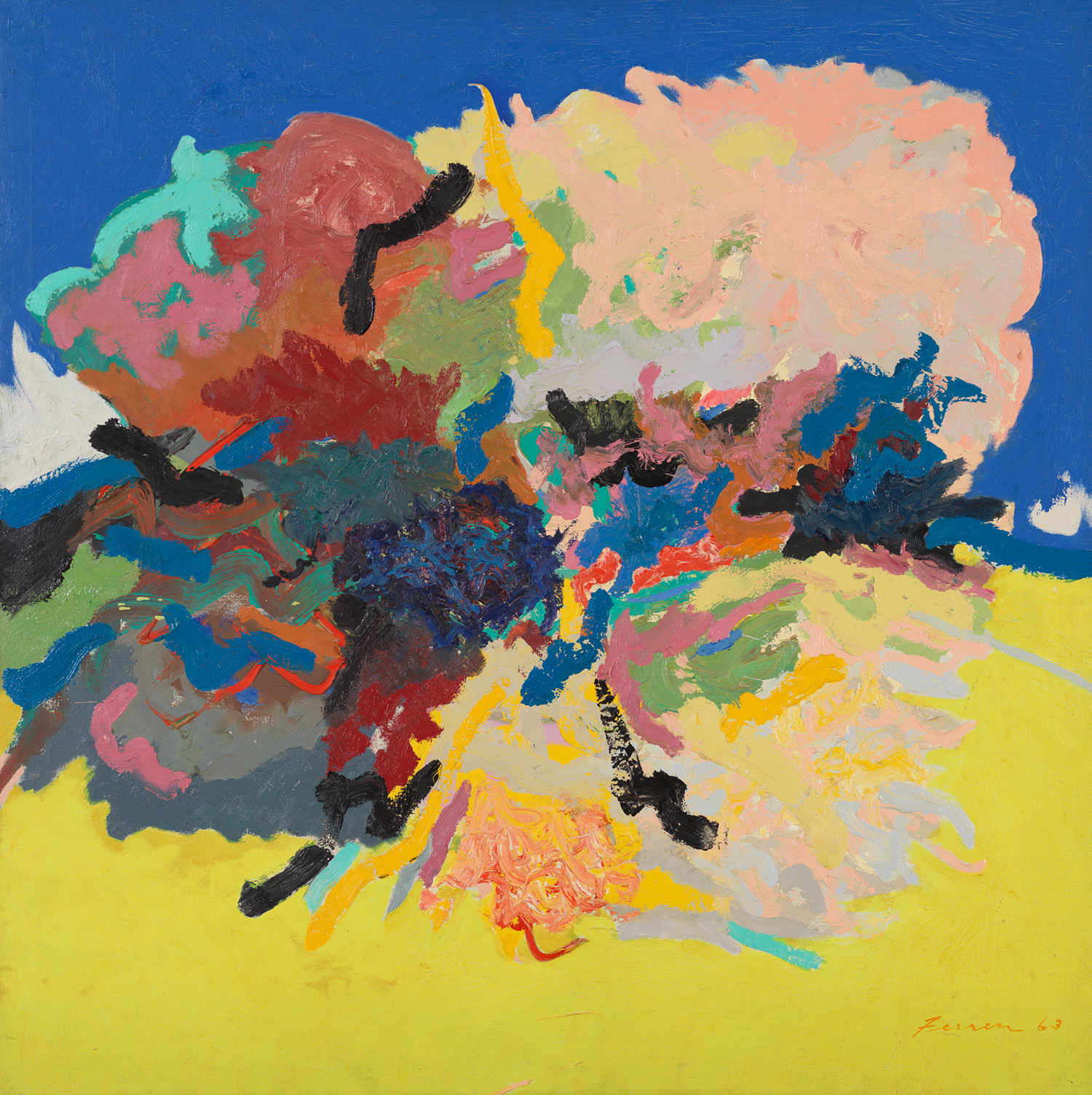
John Ferren’s works of the early 1960s mark a key period in the artist’s oeuvre as he continued his shift away from gestural abstraction but had yet to embrace his hard-edge period.
By 1960, a geometric structure emerges in Ferren’s work, frequently in the form of a framing device that often followed the same aspect-ratio of the stretcher. This form provided an arena for the work’s abstract elements to behave freely. In a sense, the geometric forms sought to contain the abstraction. Sometimes successfully, other times less so.
Exhibition Essay
Crystal, Cross, Thorn and Lattice
With their lattice-like structures and interlacing skeins of color, the paintings suggest trellises with dense chromatic tangles of tendril-like brushwork. The organic nature of these works was recognized by the critic Phyllis Braff who in 1993 wrote in the New York Times, “The bursts of vivid brush strokes often suggest layers of mini-explosions. A number seem to have to be inspired by nature, particularly the growth energy of blossoms and vegetation.” These paintings belong to a moment of refinement — a period in which Ferren drew together the discipline of his European modernist formation and the expressive energy of postwar New York painting.
Born in Oregon in 1905, Ferren first developed his sense of form by apprenticing to an Italian stonecutter in San Francisco before turning fully to painting. In the 1930s, he lived in Paris, where he became part of the international modernist circle, exhibiting with Abstraction-Création, studying printmaking at Atelier 17, and moving among artists including Joan Miró, Piet Mondrian, Jean Hélion, and Pablo Picasso. Gertrude Stein famously described him as “the only American painter foreign painters in Paris consider a painter and whose painting interests them,” a striking acknowledgment of his position within the European avant-garde.
In 1938, Ferren returned to New York and entered the charged atmosphere of the emerging New York School. He taught at the Brooklyn Museum Art School, Cooper Union, and Queens College, and in 1955 became president of The Club, the influential gathering place for Abstract Expressionist artists and writers. His work was included in important exhibitions, including Abstract Painting and Sculpture in America at The Museum of Modern Art in 1951 and Abstract Expressionists and Imagists at the Solomon R. Guggenheim Museum in 1961.
The paintings gathered here are an extension of this history and are firmly situated within Ferren’s mature period. A 1953 review in Art News described his canvases as animated by “crystal, cross, thorn and lattice” motifs — a phrase that remains useful for understanding the visual power of these later works. Their lines do not simply divide space; they create a living armature through which color, rhythm, and movement unfold.
Featured Works
Selected works from the exhibition.
Click any image to view larger.
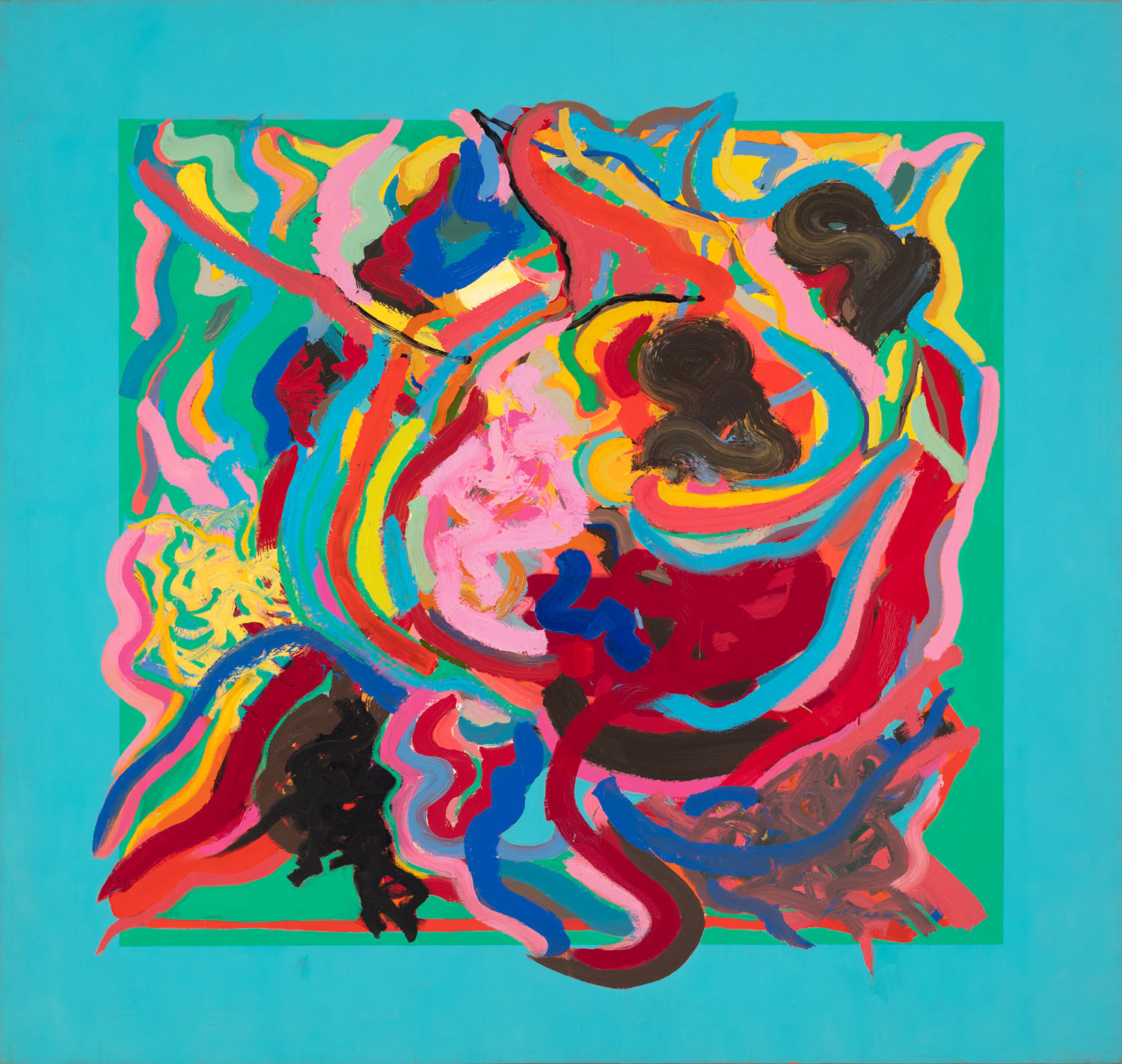
A Rose for Rose
oil on canvas, 1963
72 x 76 in. | FG© 140575
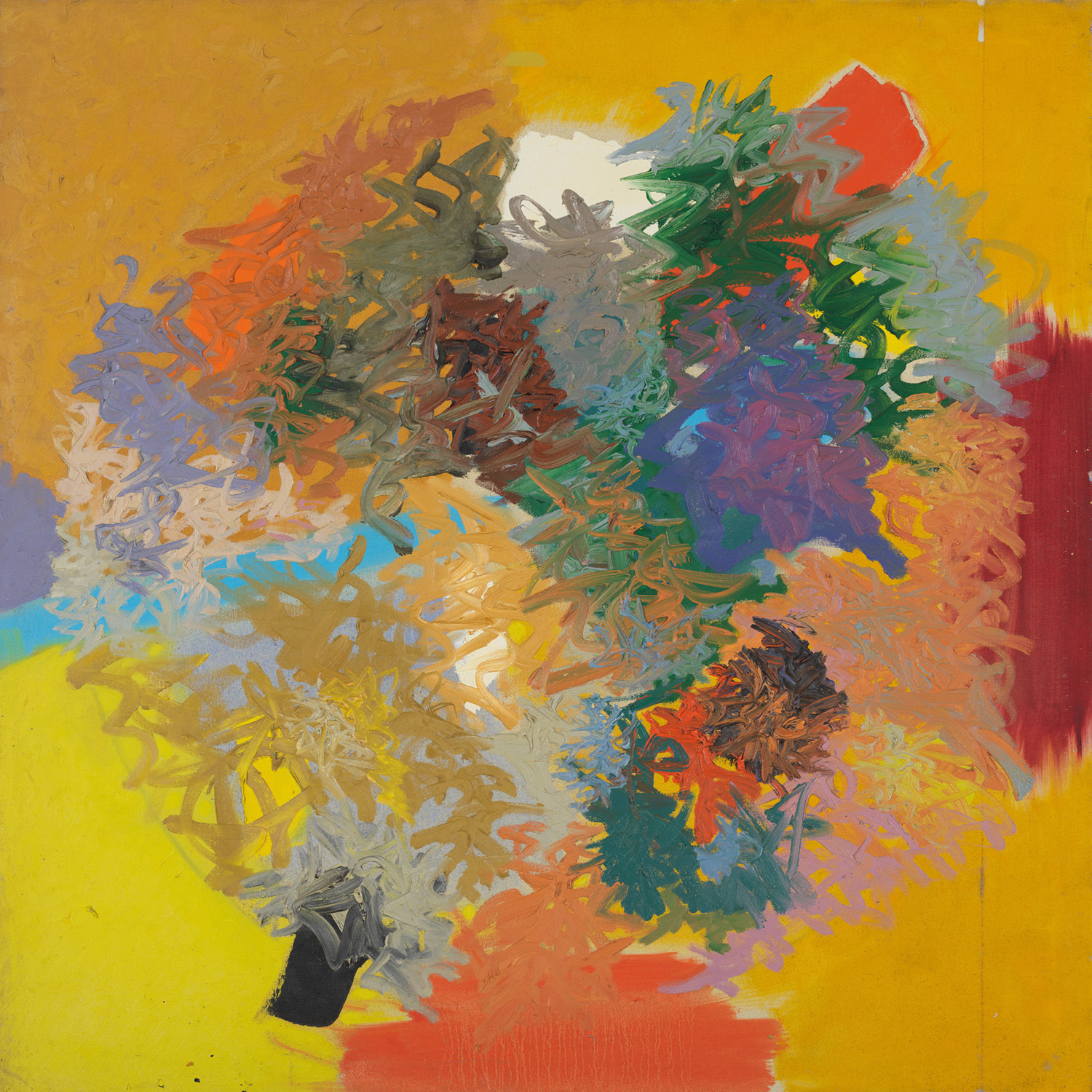
Untitled
oil on canvas, 1961
40 x 40 in. | FG© 140159
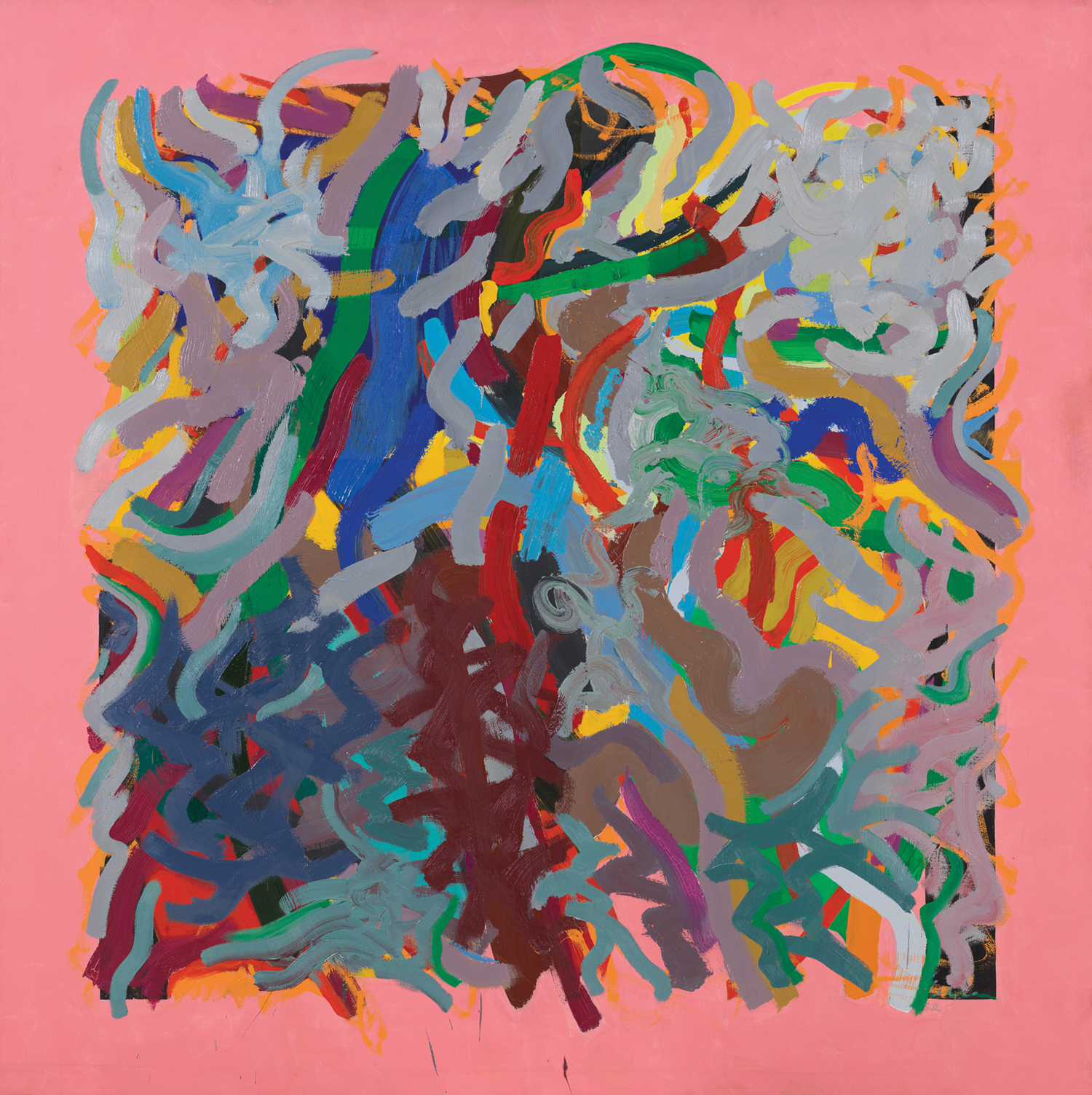
Jericho
oil on canvas
64 x 64 in. | FG© 140149
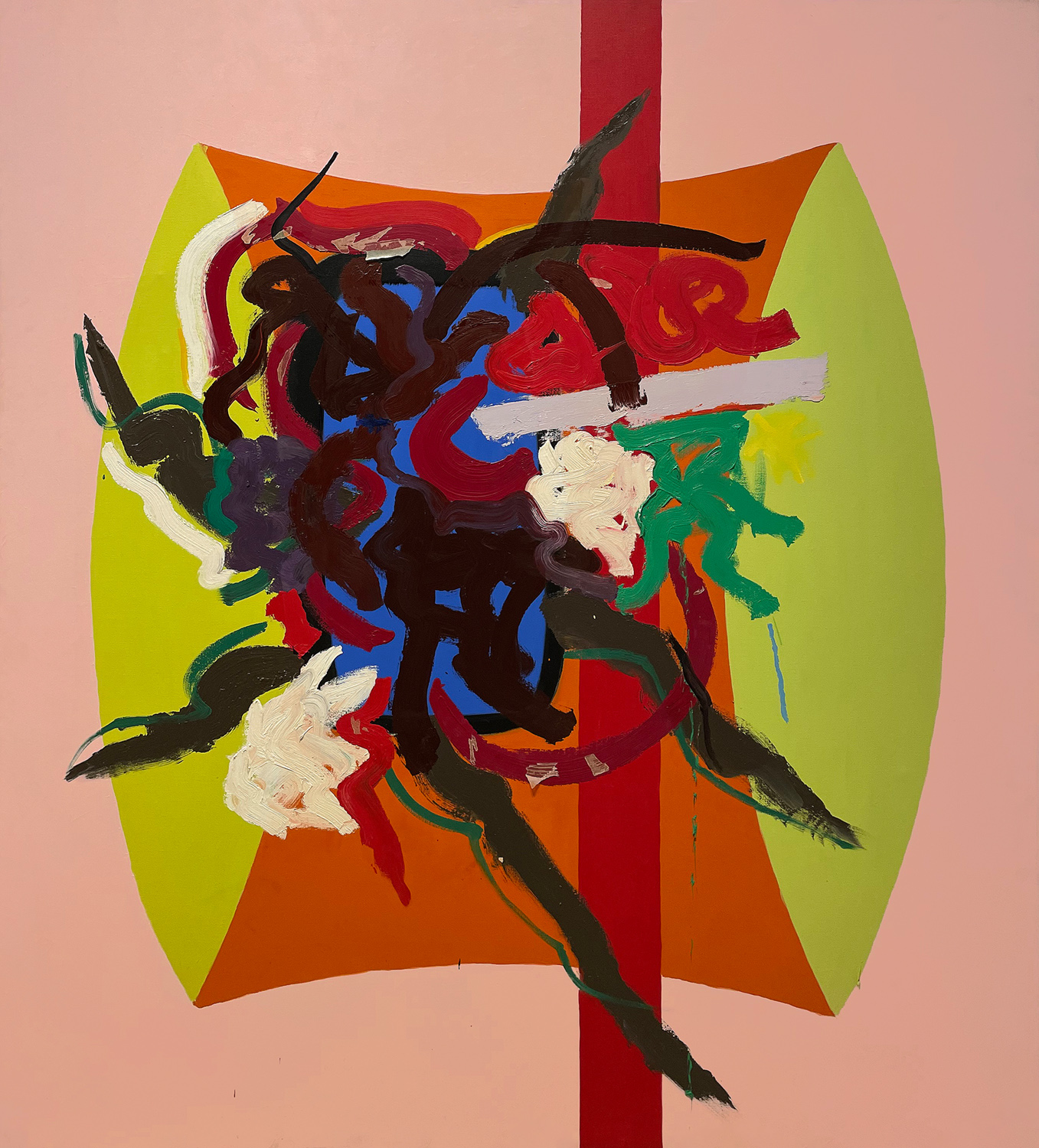
Who is this? And what is here?
oil on canvas, 1962
72 1/2 x 65 in. | FG© 141126
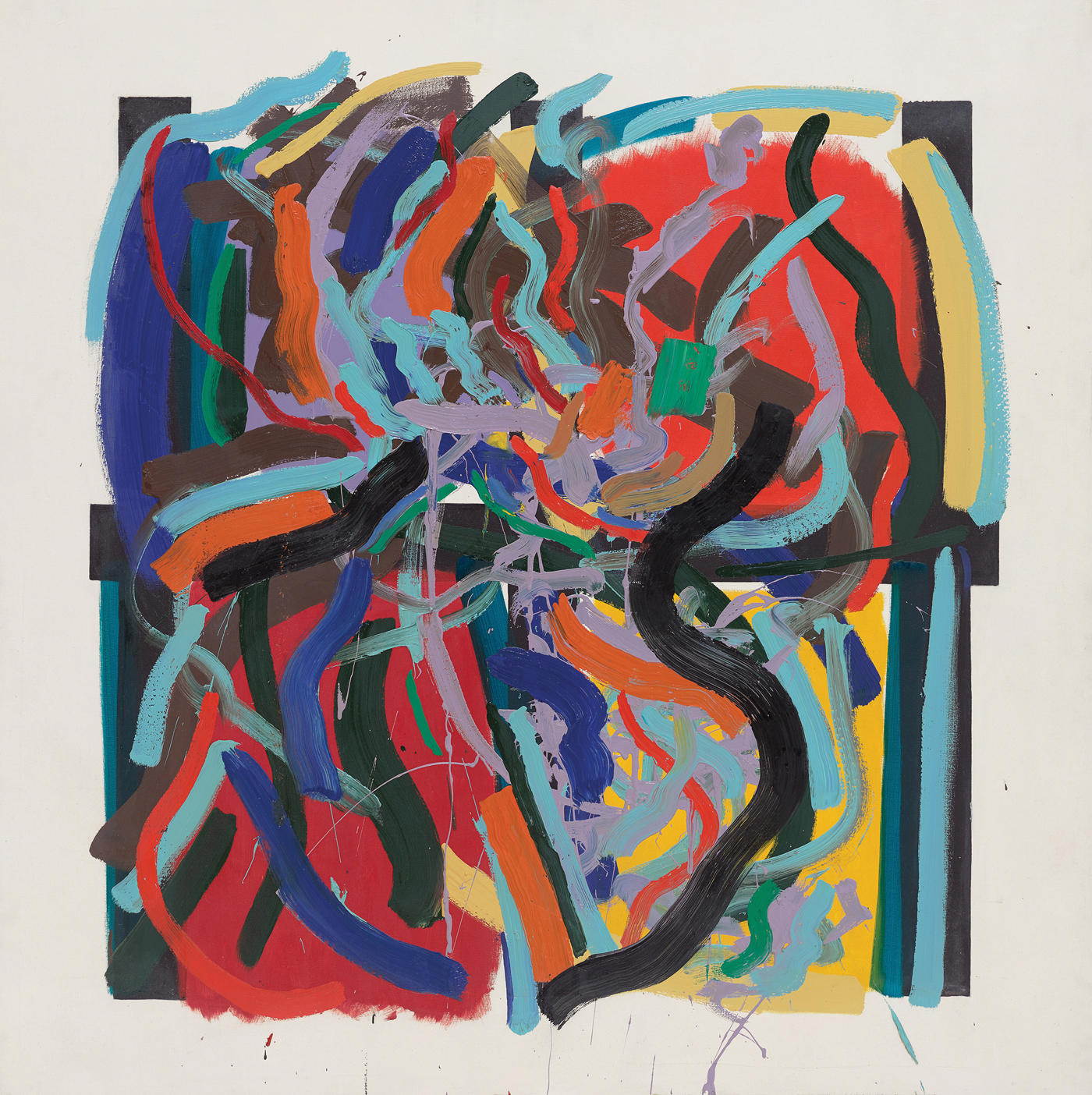
Battam Bang
oil on canvas, 1962
54 x 54 in. | FG© 207479
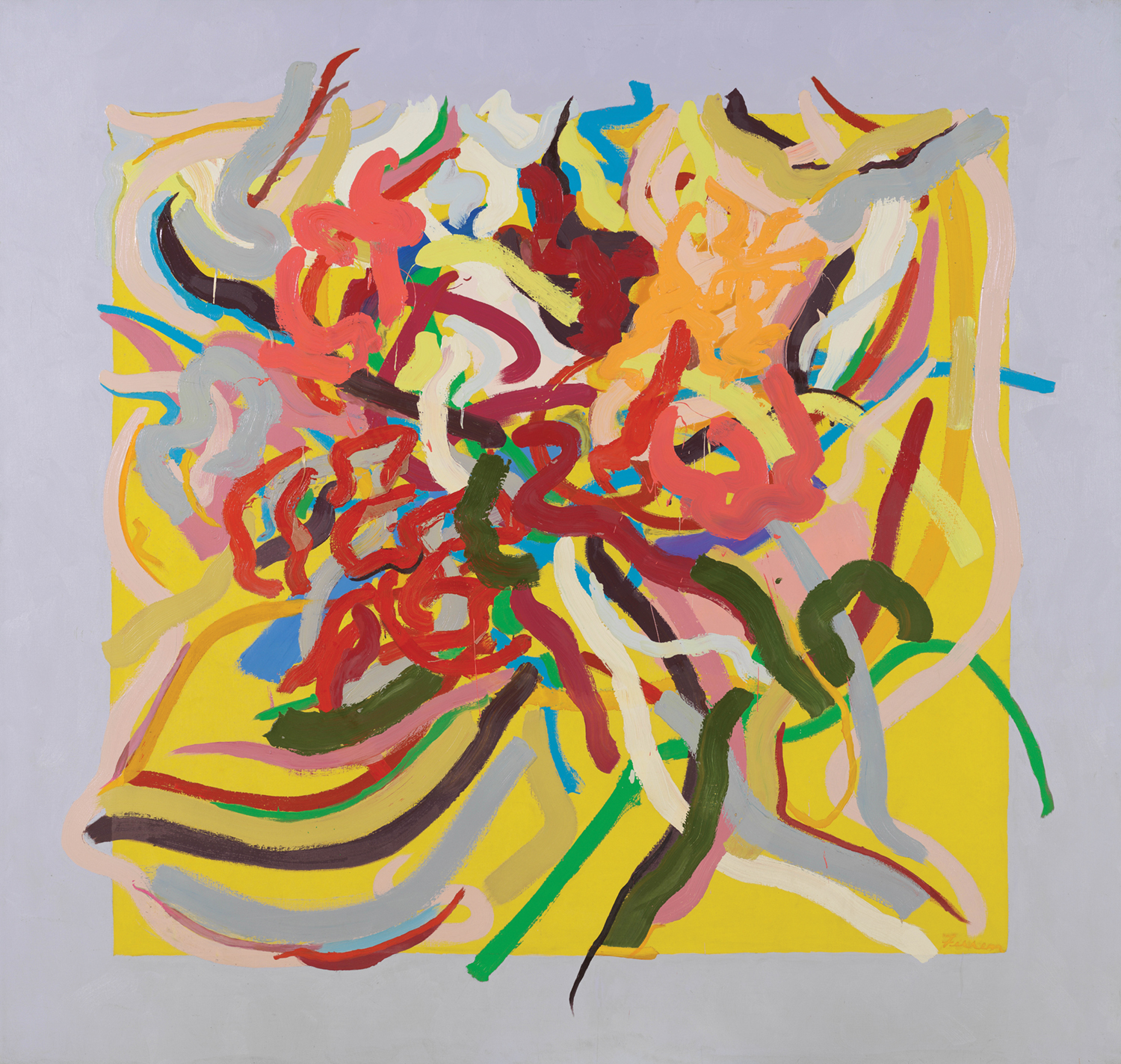
A Rose for Rae
oil on canvas, 1962
72 x 76 in. | FG© 140144
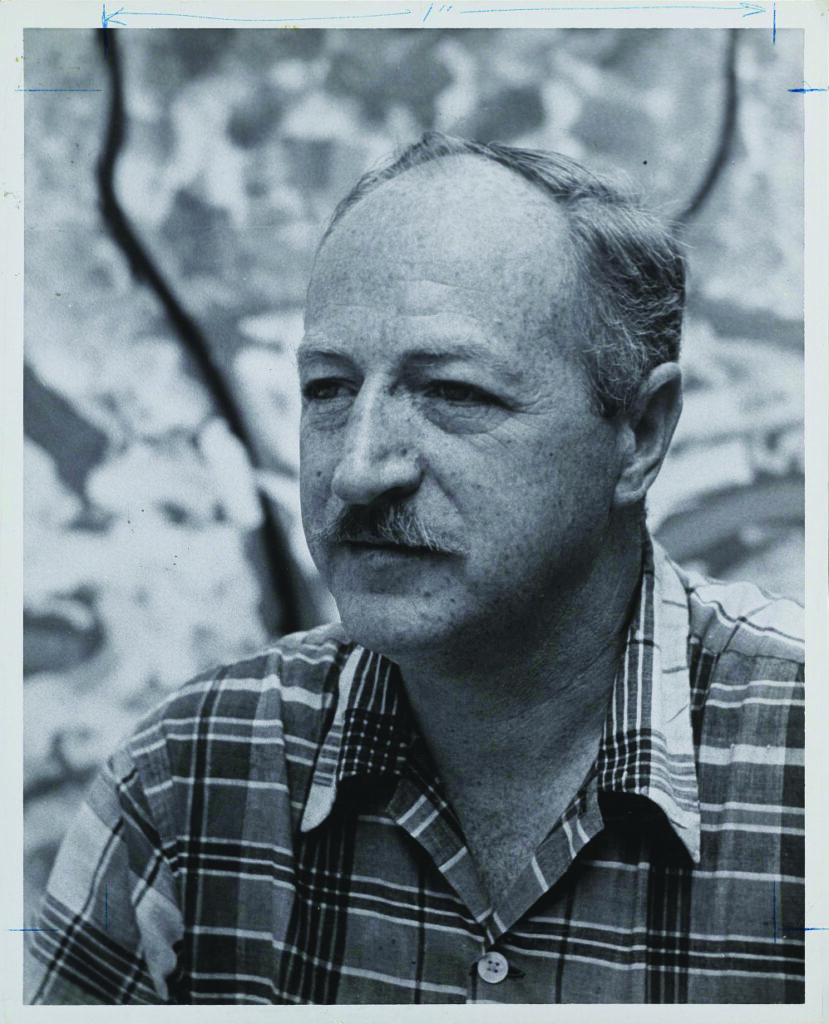
“Art [is] the great common denominator between knowledge and insight.”
— John Ferren, Address to Advanced Painting Class, Brooklyn Museum Art School, April 8, 1949; John Ferren Papers, Archives of American Art, Smithsonian Institution.
Artist Biography
John Ferren
John Ferren was an American painter whose career moved between sculpture, European modernism, and the development of abstraction in the United States. Born in Pendleton, Oregon, in 1905, Ferren first trained as a stonecutter before turning toward painting through sustained contact with the Parisian avant-garde.
His work reflects a lifelong search for the reality behind appearances, drawing on Cubism, Surrealism, Expressionism, Zen, and Abstract Expressionism. Ferren later became an active figure in New York’s postwar art community, serving as president of The Club and exhibiting widely until his death in 1970.
Read full biography
Early Life And Formation
John Ferren was born in Pendleton, Oregon, on October 17, 1905. At the age of twenty, he apprenticed with an Italian stonecutter in San Francisco. Ferren’s early experiences with stonecutting influenced his style, particularly evident in the sculptural quality of his paintings, achieved through flat backgrounds and curving planes.
Though Ferren was known later in his career as an intellectual among his peers, he avoided academia and formal art institutions, preferring to develop his own artistic style and theories that were nourished by his adventurous lifestyle and curious mind. Going to Europe in 1929, he sat in on classes at the Sorbonne in Paris and also studied briefly at the Universita degli Studi in Florence and the Universidad de Salamanca. Ferren once said, “[I] literally learned art around the cafe tables in Paris, knowing other artists and talking.”
In Saint-Tropez, he met Hans Hofmann, Vaclav Vytlacil, and other Hofmann students. When Ferren stopped to visit them in Munich, he saw a Matisse exhibition, an experience that was instrumental in shifting his work from sculpture to painting.
Paris And European Modernism
His travels in Europe exposed him to the modern art movements of the early twentieth century, including Cubism, Surrealism, and Expressionism. In 1930, Ferren returned to San Francisco for his debut solo exhibition at the Art Center; however, the lack of energy and artistic stimulation on the West Coast at that time led him to return to Paris in 1931, where he lived for most of the next seven years.
Surrounded by the Parisian avant-garde, Ferren wrestled with his own idiom. His diaries from these years indicate far-ranging explorations, from a Hofmann-like concern for surface to the spiritual searches of Kandinsky and Mondrian.
Atelier 17 And Relief Sculpture
In Paris, Ferren was introduced to William Stanley Hayter’s Atelier 17, where some of the greatest artists of the twentieth century, including Joan Miro, Max Ernst, and Marcel Duchamp, participated in experimental workshops. Like them, Ferren explored Hayter’s revolutionary theories on “the nature of space in a linear world,” inquiries that transformed Ferren’s style.
He rediscovered sculpture and developed a new technique for creating relief sculptures by pouring plaster into lines etched in a metal etching plate. The graceful lines he had etched were revealed on the plaster surface, creating rhythmic compositions. These reliefs were among Ferren’s most successful works. Writer Gertrude Stein said of him, “Ferren ought be a man who is interesting, he is the only American painter foreign painters in Paris consider as a painter and whose paintings interest them. He is young yet and might do . . . that thing called abstract painting.”
The Paris Avant-Garde
Although Gallatin and Morris were the first Americans to buy his paintings, Ferren associated with members of the Abstraction-Creation group rather than with the American expatriate community. He married the daughter of Spanish artist Manuel Ortiz de Zarate. Through this union he met the circle of Parisian-Spanish painters that included Picasso, Miro, and Torres-Garcia.
With Jean Helion, Ferren wrote manifestoes against Surrealism, although he remained friendly with Max Ernst and Andre Breton, and illustrated books by Surrealist poets. In Paris, he met Pierre Matisse, who in 1936 hosted a show of Ferren’s work at his New York gallery.
War Years And Abstraction
During World War II, Ferren served with the Office of War Information in the North African and European theaters. By this time, Ferren had reintroduced the figure into his paintings without giving up abstraction. It was not until the end of World War II that he turned toward Abstract Expressionism.
In transitions that ranged from geometric abstractions to figurative paintings, Ferren was always striving to be truthful and to create work that spoke from within. In the abstract and geometric periods that followed the war, he freely expressed what he felt to be the final objective behind the act of painting: the search for, and expression of, the reality behind the appearance of the world.
His early appreciation of Kandinsky and a fascination with Zen that dated from his youth helped define the way he thought about painting throughout his life. He called art the “great common denominator between knowledge and insight,” and said it should explore the intuitive forces of life, whether spiritual, mental, social, or psychological.
New York And The Club
Ferren returned to the United States in 1948, settling in New York. He attended American Abstract Artists meetings but felt little of the frustration that had prompted the organization’s formation. After Ad Reinhardt used Ferren’s name without permission on a pamphlet passed out on the Museum of Modern Art picket line, Ferren broke from the group.
He established himself in New York’s art community by becoming a member, and later president, of The Club, an informal group of artists who represented the social and intellectual center of Abstract Expressionism in New York.
Film Collaborations And Later Work
Always exploring new forms of art, in the late 1950s Ferren collaborated with film director Alfred Hitchcock, serving as artistic consultant for the films The Trouble with Harry (1955) and Vertigo (1958). He continued to paint and exhibit actively until his passing in 1970.
Legacy And Collections
In the same way that Ferren remained honest to his vision through his work, his paintings exemplify a truth based on a beauty that cannot be fully verbalized, but once seen, the power of their beauty is easily experienced. Findlay Galleries proudly presents John Ferren’s work as the sole representative of his estate.
John Ferren’s work can be found in the collections of esteemed institutions across America, including the Guggenheim Museum and Foundation, The Museum of Modern Art in New York, The Metropolitan Museum of Art, and the Whitney Museum of American Art.
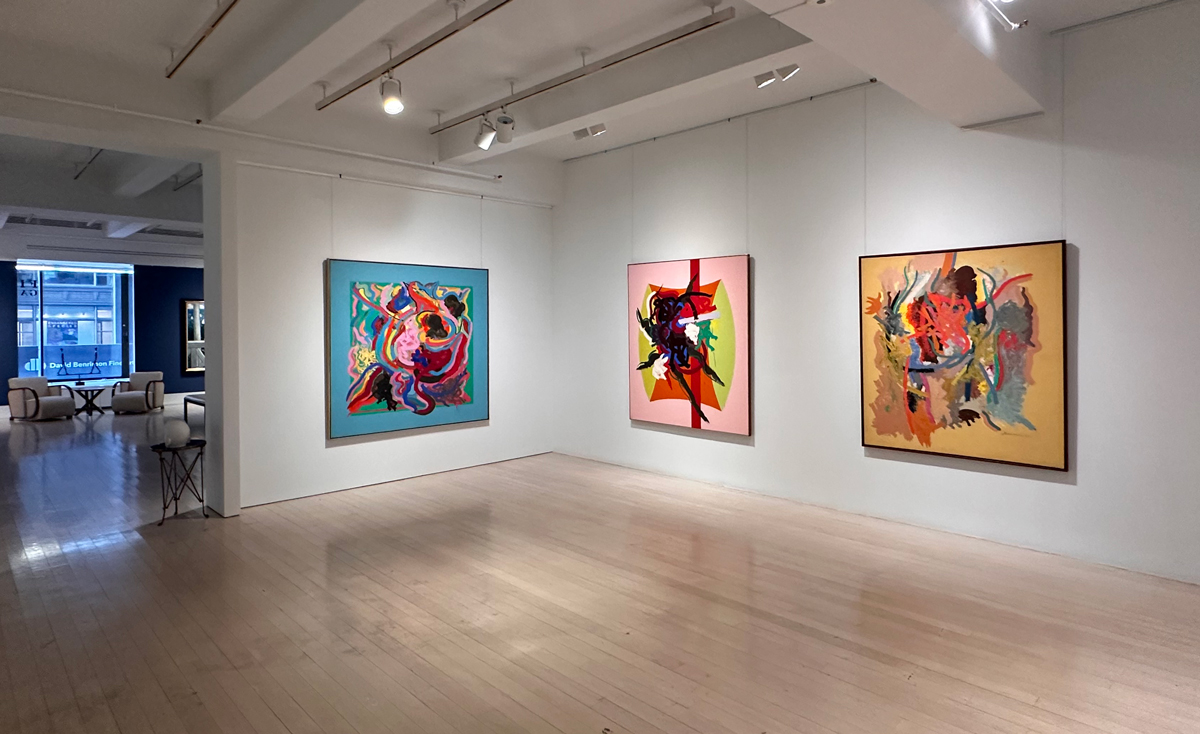
Installation Images
Views from the exhibition, including gallery installation photography and selected details.
Exhibitions
Selected Exhibitions
A focused overview of important exhibitions, followed by a longer chronological exhibition archive.
Abstractions on Plaster by John Ferren
The Arts Club of Chicago, Chicago, 15-28 Mar. 1938.
Oils and Pastels by John Ferren
San Francisco Museum of Art, San Francisco, 10-31 May 1939.
1955 Pittsburgh International Exhibition of Contemporary Painting
Carnegie Institute, Department of Fine Arts, Pittsburgh, 13 Oct.-18 Dec. 1955.
American Abstract Expressionists and Imagists
Solomon R. Guggenheim Museum, New York, 13 Oct.-31 Dec. 1961.
The Abstract Spirit: John Ferren (1905-1970)
Pollock-Krasner House and Study Center, East Hampton; University Art Gallery, State University of New York at Stony Brook, Stony Brook; Godwin-Ternbach Museum, Queens, 5 Aug.-31 Oct. 1993.
View full exhibition archive
- 1930 Art Center, San Francisco.
- 1932 Galerie Zak, Paris.
- 1936 Pierre Loeb, Paris.
- 1936 Pierre Matisse Gallery, New York.
- 1936 Corcoran Gallery of Art, Washington.
- 1936 Minneapolis Institute of Arts, Minneapolis.
- 1937-1938 Pierre Matisse Gallery, New York, two exhibitions.
- 1938 The Arts Club of Chicago, Chicago, Abstractions on Plaster by John Ferren, 15-28 Mar. 1938.
- 1939 San Francisco Museum of Art, San Francisco, Oils and Pastels by John Ferren, 10-31 May 1939.
- 1940 Pierre Loeb, Paris.
- 1942 Corcoran Gallery of Art, Washington.
- 1947 Willard Gallery, New York.
- 1947 Kleemann Galleries, New York, John Ferren.
- 1949 Kleemann Gallery, New York.
- 1951 Whitney Museum of American Art, New York, 1951 Annual Exhibition of Contemporary American Painting, 8 Nov. 1951-6 Jan. 1952.
- 1952 Santa Barbara Museum of Art, Santa Barbara, Oil and Watercolor Paintings by John Ferren, 1-27 Jul. 1952.
- 1952 San Francisco Museum of Art, San Francisco, Paintings by John Ferren, Frederick Franck, 13 Aug.-7 Sept. 1952.
- 1953 Alexander Iolas Gallery, New York.
- 1954-1958 Stable Gallery, New York, five solo exhibitions.
- 1955 Carnegie Institute, Department of Fine Arts, Pittsburgh, 1955 Pittsburgh International Exhibition of Contemporary Painting, 13 Oct.-18 Dec. 1955.
- 1955 Whitney Museum of American Art, New York, 1955 Annual Exhibition of Contemporary American Paintings, Sculpture, Watercolors and Drawings, 12 Jan.-20 Feb. 1955.
- 1955 Whitney Museum of American Art, New York, 1955 Annual Exhibition of Contemporary American Painting, 9 Nov. 1955-8 Jan. 1956.
- 1956 Whitney Museum of American Art, New York, 1956 Annual Exhibition of Contemporary American Sculpture, Watercolors and Drawings, 18 Apr.-10 Jun. 1956.
- 1956 Whitney Museum of American Art, New York, 1956 Annual Exhibition: Sculpture, Paintings, Watercolors, Drawings, 14 Nov. 1956-6 Jan. 1957.
- 1957 The Arts Club of Chicago, Chicago, John Ferren, Julio Girona, John Grillo, Angelo Ippolito, Marca-Relli, Joan Mitchell: Young American Painters, 22 Feb.-18 Mar. 1957.
- 1959 The Phillips Collection, Washington, Paintings by John Ferren, 11 Jan.-9 Feb. 1959.
- 1959 Whitney Museum of American Art, New York, 1959 Annual Exhibition of Contemporary American Painting, 9 Dec. 1959-31 Jan. 1960.
- 1961 Solomon R. Guggenheim Museum, New York, American Abstract Expressionists and Imagists, 13 Oct.-31 Dec. 1961.
- 1962 Rose Fried Gallery, New York.
- 1964 Centre d’art contemporain, Beirut, Ferren, Beirut ’64: Exhibition of Paintings by John Ferren.
- 1964 Los Angeles County Museum of Art, Los Angeles, Post painterly abstraction, 23 Apr.-7 Jun. 1964.
- 1964 Walker Art Center, Minneapolis, Post painterly abstraction, 13 Jul.-16 Aug. 1964.
- 1964 Art Gallery of Toronto, Toronto, Post painterly abstraction, 20 Nov.-20 Dec. 1964.
- 1965 Whitney Museum of American Art, New York, 1965 Annual Exhibition of Contemporary American Painting, 8 Dec. 1965-30 Jan. 1966.
- 1965 American Embassy Gallery, London.
- 1965-1968 Rose Fried Gallery, New York, multiple solo exhibitions.
- 1967 Whitney Museum of American Art, New York, 1967 Annual Exhibition of Contemporary Painting, 13 Dec. 1967-4 Feb. 1968.
- 1969 The Parrish Museum, Southampton.
- 1971 The Century Club, New York, John Ferren Memorial Show.
- 1971 A.M. Sachs Gallery, New York.
- 1972-1978 A.M. Sachs Gallery, New York, five exhibitions, including three solo exhibitions.
- 1979 The Graduate Center, City University of New York, New York, Retrospective.
- 1985-1992 Katharina Rich Perlow Gallery, New York, six solo exhibitions.
- 1993 Pollock-Krasner House and Study Center, East Hampton, The Abstract Spirit: John Ferren (1905-1970), 5 Aug.-30 Oct. 1993.
- 1993 University Art Gallery, State University of New York at Stony Brook, Stony Brook, The Abstract Spirit: John Ferren (1905-1970), 7 Sept.-23 Oct. 1993.
- 1993 Godwin-Ternbach Museum, Queens College, Queens, The Abstract Spirit: John Ferren, 7 Sept.-31 Oct. 1993.
- 1997 Naples Museum of Art, Naples, Leaders in American Modernism.
- 2000 Hollis Taggart Gallery, New York, Order and Intuition: American Abstraction from the Patty & Jay Baker Naples Museum of Art, 1913-1954.
- 2000 David Findlay Jr Gallery, New York, About Abstraction.
- 2001 Spanierman Modern, New York, Hot and Cool Abstractions, 1940s to the Present.
- 2003 Katharina Rich Perlow Gallery, New York, American Abstractions Part 2: Paintings 1950s-Present.
- 2005 David Findlay Jr Gallery, New York, East End: Artists of the Hamptons.
- 2009 Eric Firestone Gallery, East Hampton.
- 2011 Findlay Galleries, New York, John Ferren, Ward Jackson, Ilya Bolotowsky and Leon Polk Smith: Edge + Color.
- 2012 David Findlay Jr Gallery, New York, John Ferren: Works from the 1950s-60s.
- 2012 Findlay Galleries, Palm Beach, John Ferren and Ward Jackson: Edge + Color.
- 2013 Findlay Galleries, Palm Beach, American Abstractionists.
- 2015 Findlay Galleries, New York, American Abstractionists.
- 2016 Findlay Galleries, New York, Lyrical Abstraction.
- 2017 Findlay Galleries, Palm Beach, Summer Selections.
- 2020 Findlay Galleries, New York, Summer Selections.
- 2021 Findlay Galleries, New York, From Paris to Springs.
- 2022 Findlay Galleries, Palm Beach, From Paris to Springs II.